Sun Devil Motorsports EV - High Voltage Detection Lights
Purpose:
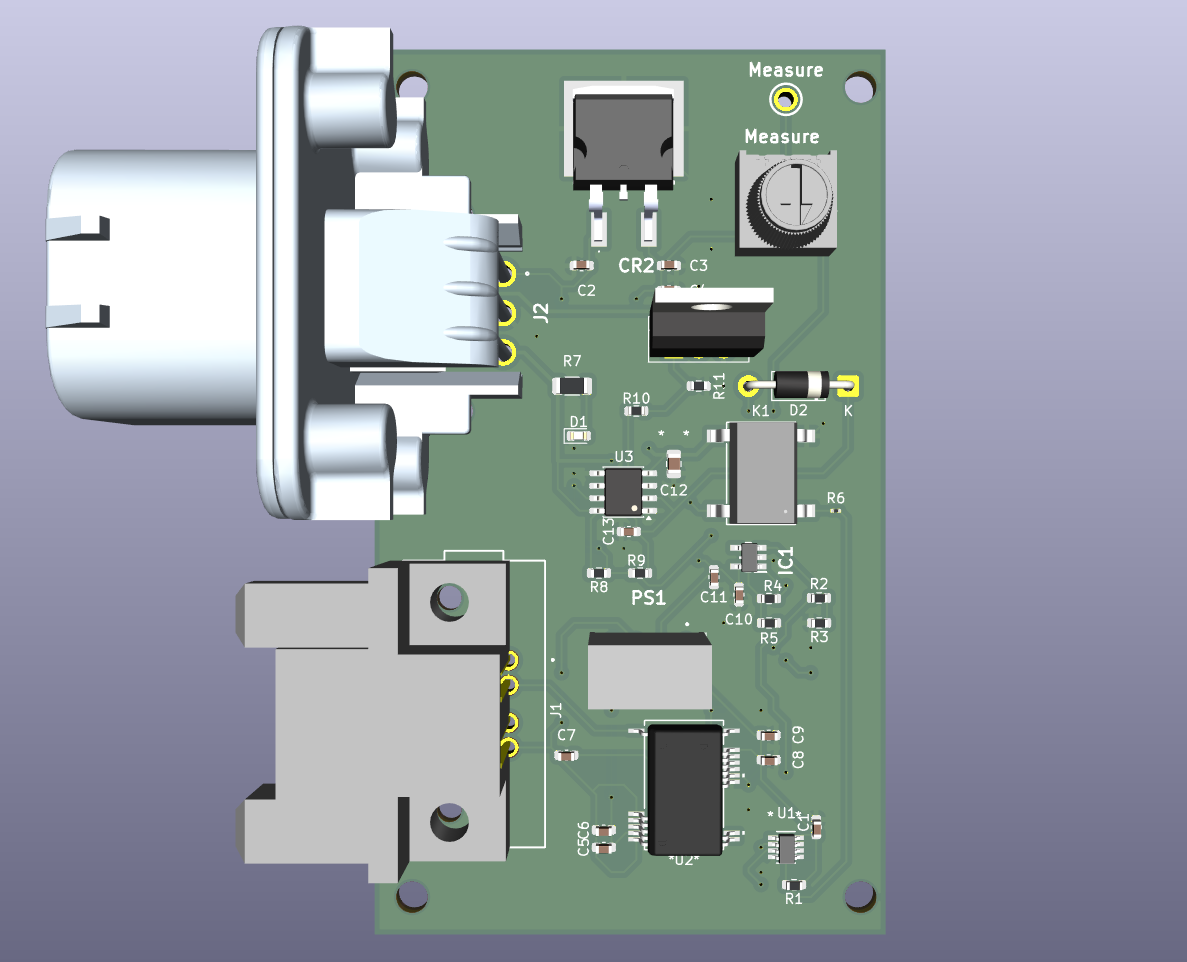
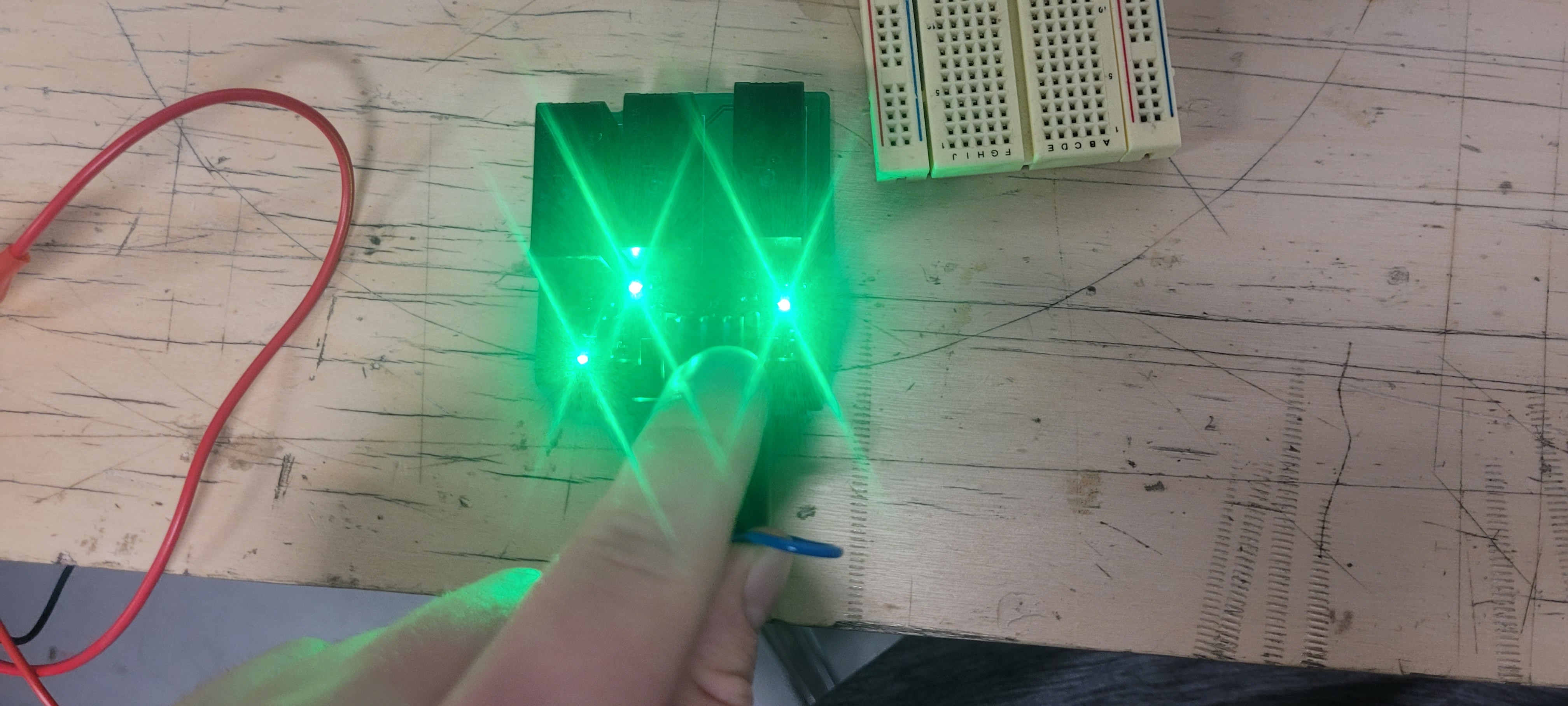
In the car, a set of lights must flash when the tractive system is considered energized. This is important for safety so that it is clear that high voltage is present, and the specific threshold for this is when HV > 60V. A circuit that checks for this condition and flashes these lights through hardware must be mode.
Function:
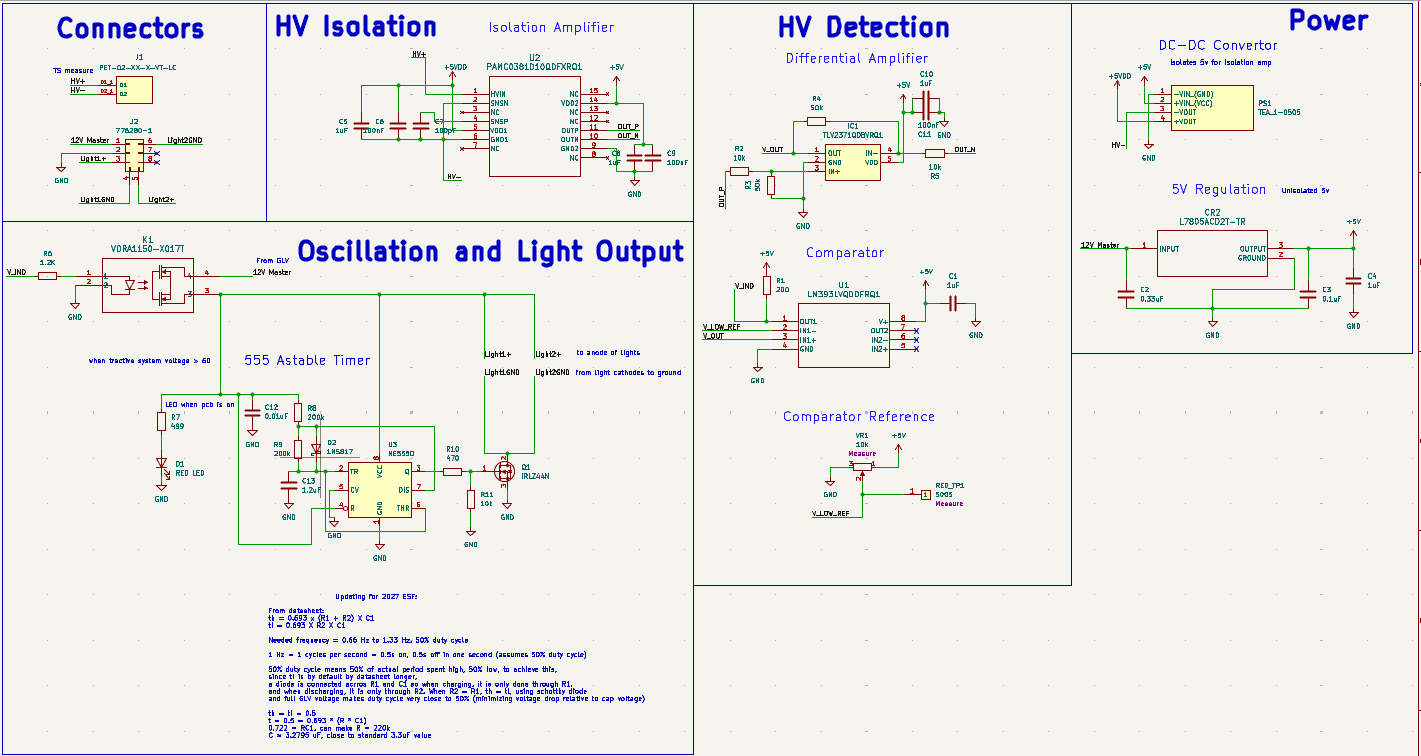
Voltage from the tractive system is fed into an isolation amplifier, which provides a higher level of isolation for the raw signal, and outputs a differential signal proportional to the input voltage. This signal is fed into a differential amplifier, which outputs a single output, referenced directly to the low voltage ground, to be used in the comparator with the variable input voltage, where if it is above this chosen value, will mean there is high voltage present, and power the 555 timer, which uses a stable oscillation in order to flash external lights above the driver at 1Hz.
Function:
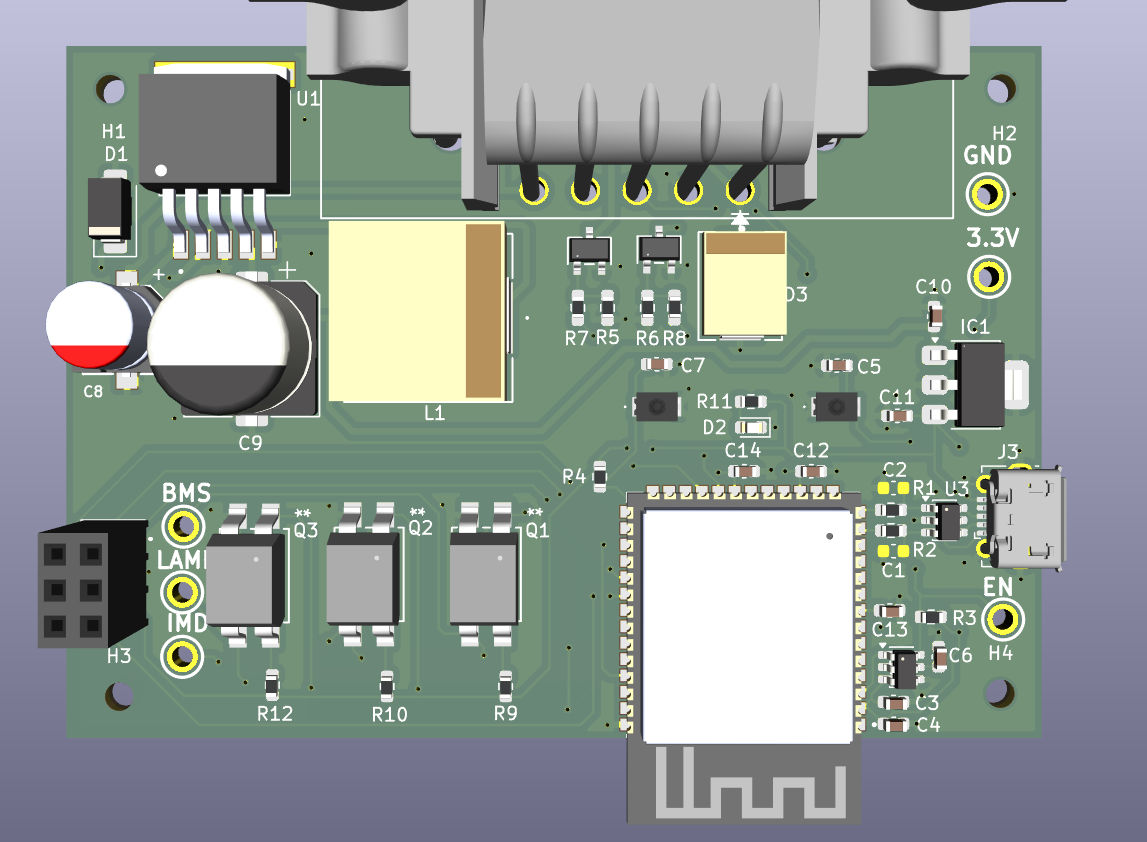
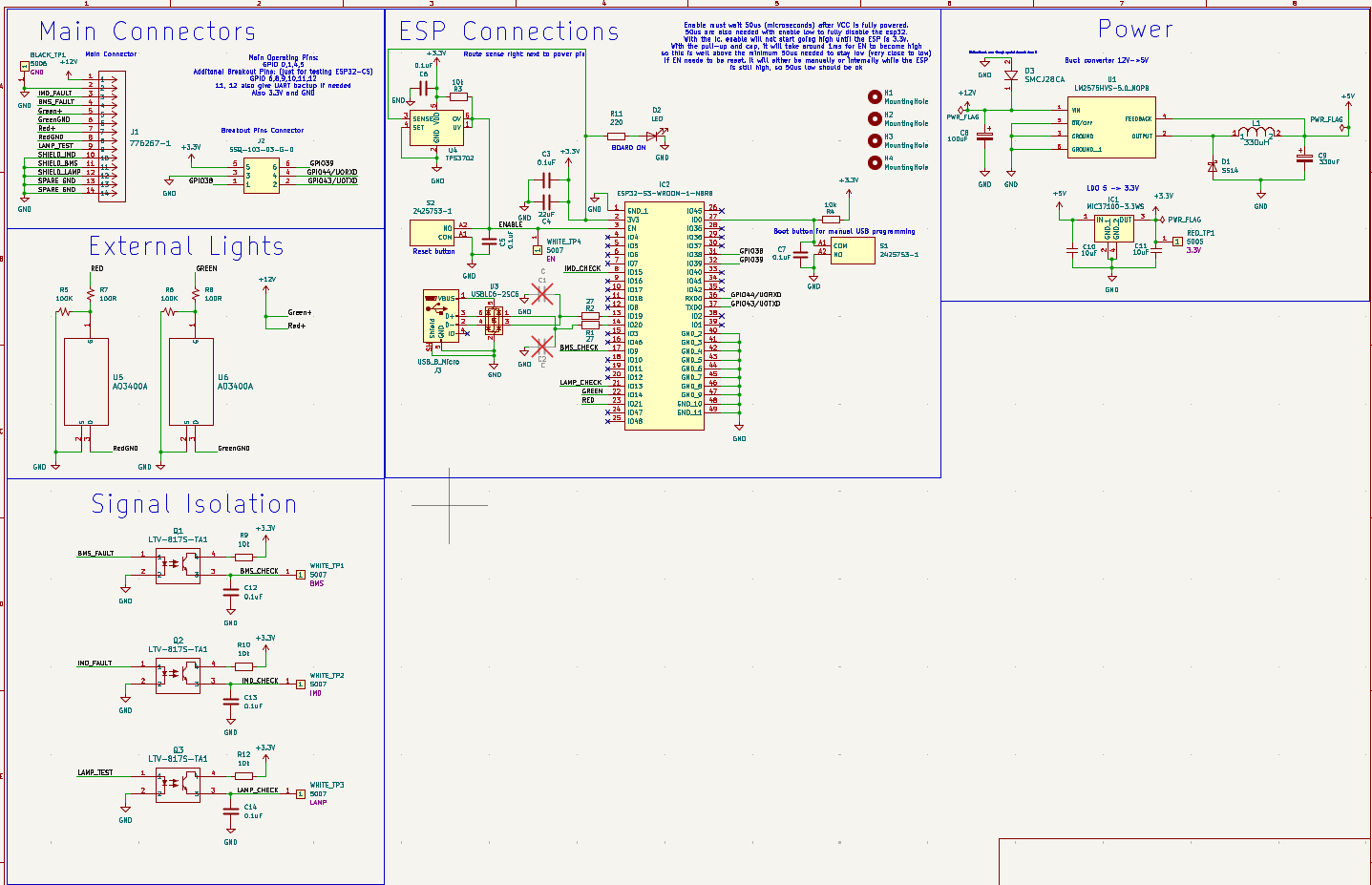
The two fault signals are seen by an ESP32-S3-WROOM-1, which upon reading a fault, will output to an NMOS, flashing an external red light to indicate an error. In normal operation a green light should stay constantly on instead, also signifying the ESP is on and actively checking for faults. These signals are isolated and routed to minimize noise. Since proper booting of the MCU is required when the car turns on, a power monitoring IC holds the ESP's enable pin low until VCC is at 3.3v to ensure proper powering as reliable operation is needed for software-based control in an EV.
Sun Devil Motorsports EV - Tractive System Fault Indication
Purpose:
When there is a fault in the battery management system or the insulation monitoring device, this condition needs to be displayed. These are tractive system errors, meaning something is wrong in some part of the high voltage area of the car, and people around should be informed of this to be cautious of the vehicle.
Sun Devil Motorsports EV - Shutdown Circuit Design
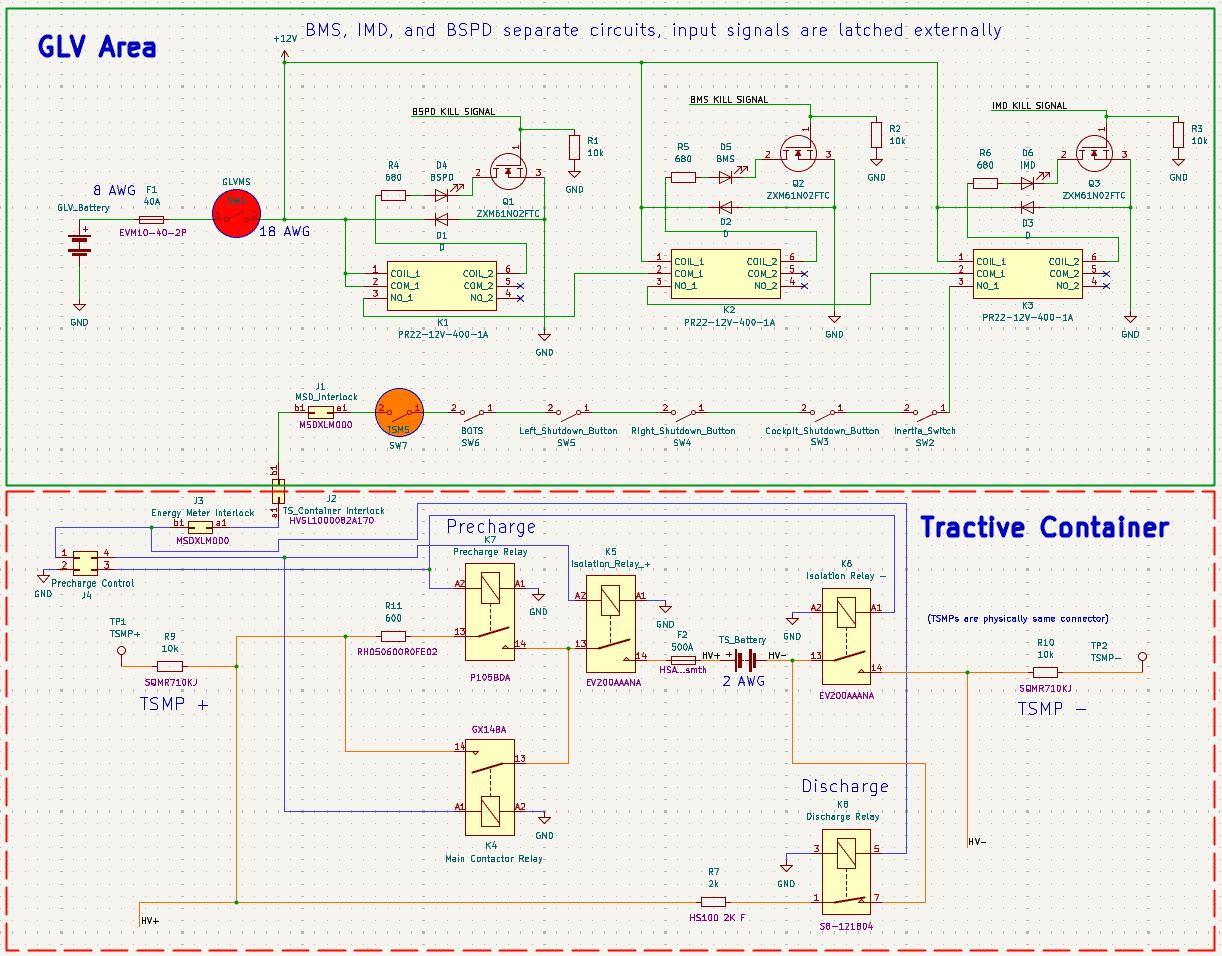
This was a good collaboration project, requiring work with high voltage to determine how the shutdown circuit would operate in the high voltage section of the car. Specifically, looking at how we want to approach the isolation relay and precharge approach. The schematic shown is the elements present in the shutdown circuit, where most of them will be hard-wired when we assemble it later in the year.
The circuit itself is just many components in series spanning different parts of the car, where if any of them open, results in the whole circuit breaking. One interesting thing is that we will have to remanufacture the BPSD, BMS, and IMD signal-containing board as somehow none of us realized we forgot to add pulldown resistors to the NMOS gates the first time. It can be quite easy to overlook obvious details without thinking!
Sun Devil Motorsports - Current Work
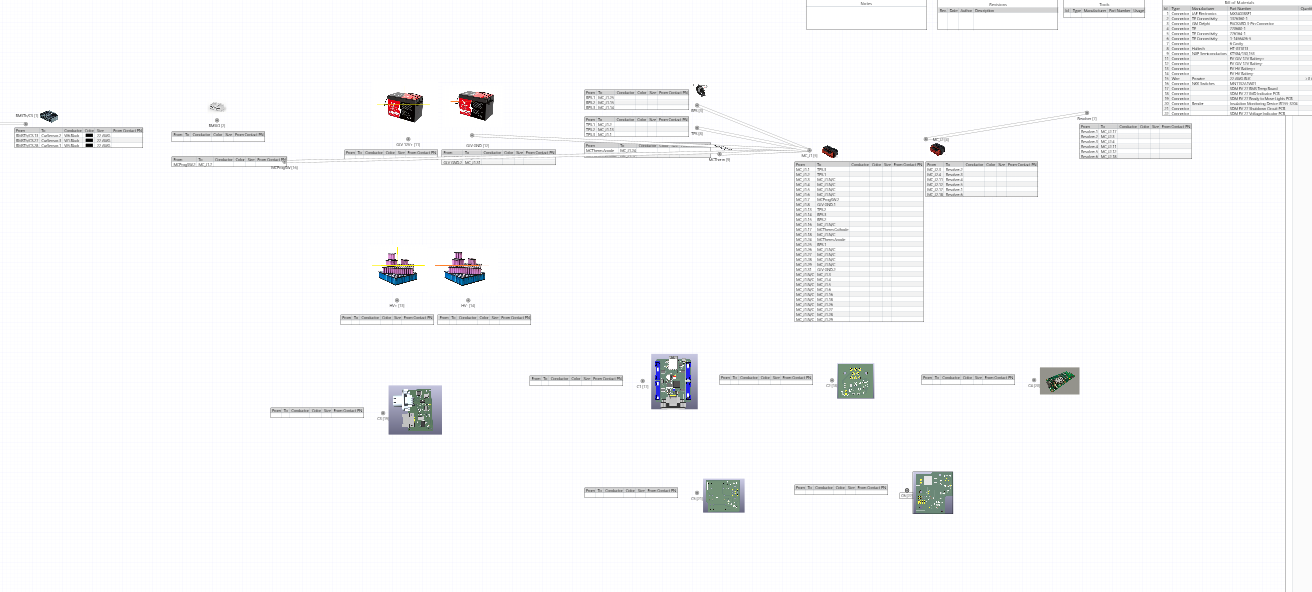
Unlike the above examples, most work I do now as the Low Voltage lead is not specific project oriented, but instead focusing on organizing and managing existing projects. With the start of the fall semester many new great members were interviewed and onboarded. Our first ever car is around halfway done at this time and the goal is to work hard to try having everything ready for competition in June 2027!
This year as lead I will only work on small things myself, and will primarily collaborate with other leads to keep track of projects, manage deadlines, make purchases, and ensure rules compliance. The main new and existing projects the team of around 15 in Low Voltage will be working on include:
- Updating and testing PCBs for full functionality
- Creating firmware for and making a fully custom VCU
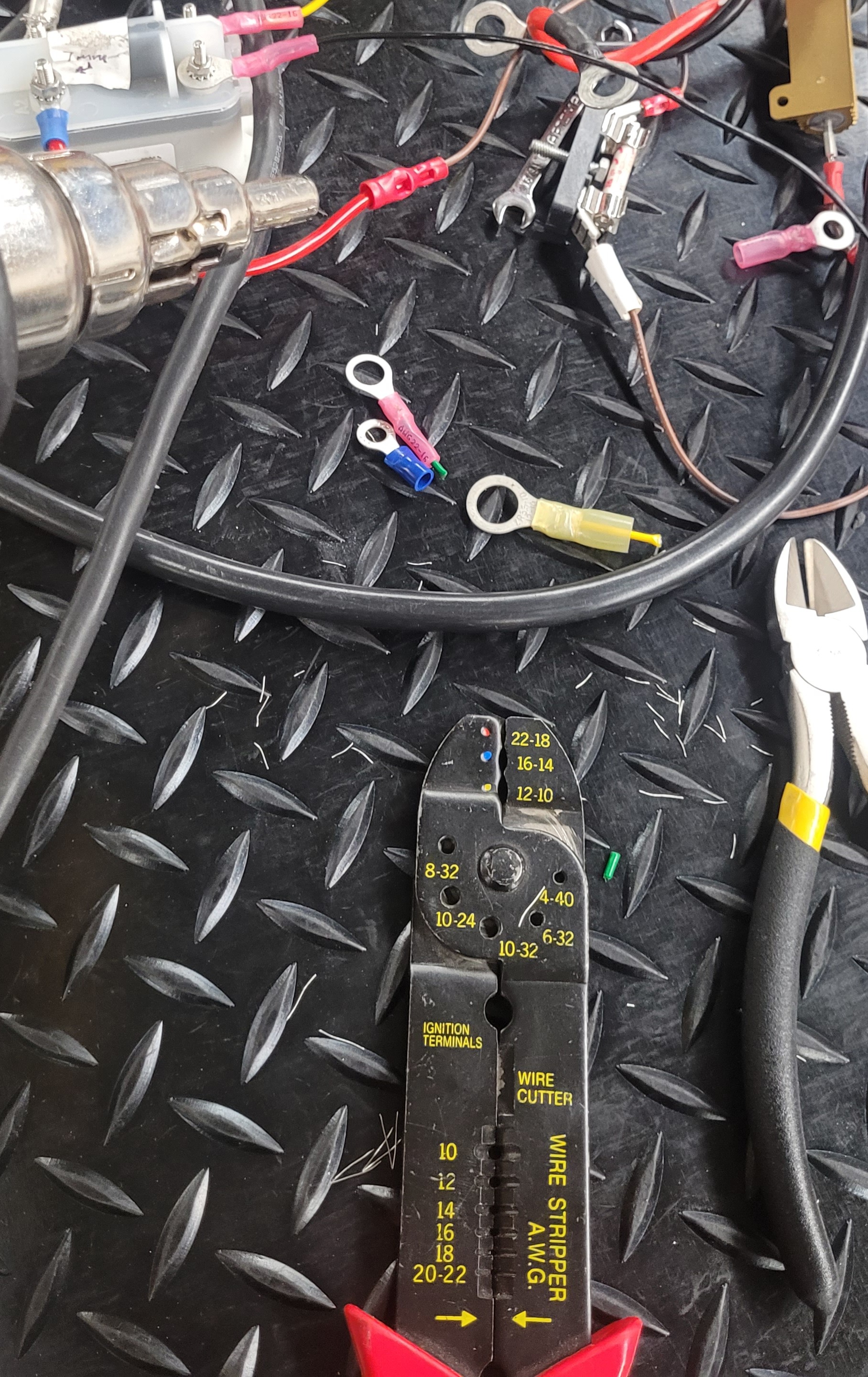
- Designing the low voltage wiring harness and assembling all physical components
- Making PCB housings
- Extensively testing the low voltage system in different stages of the vehicle for reliable function under all possible conditions
ASU - FSE 100 Project
Overview:
This first semester intro engineering Arduino project is simpler compared to other work in Sun Devil Motorsports, though still worth mentioning as a college project for the significant time it took as I was tasked with all electrical and coding work, and debugging took many hours after classes.
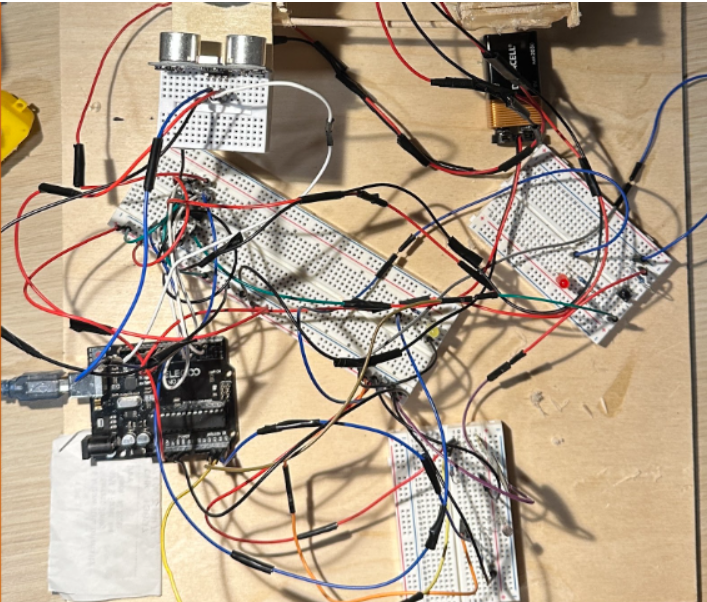
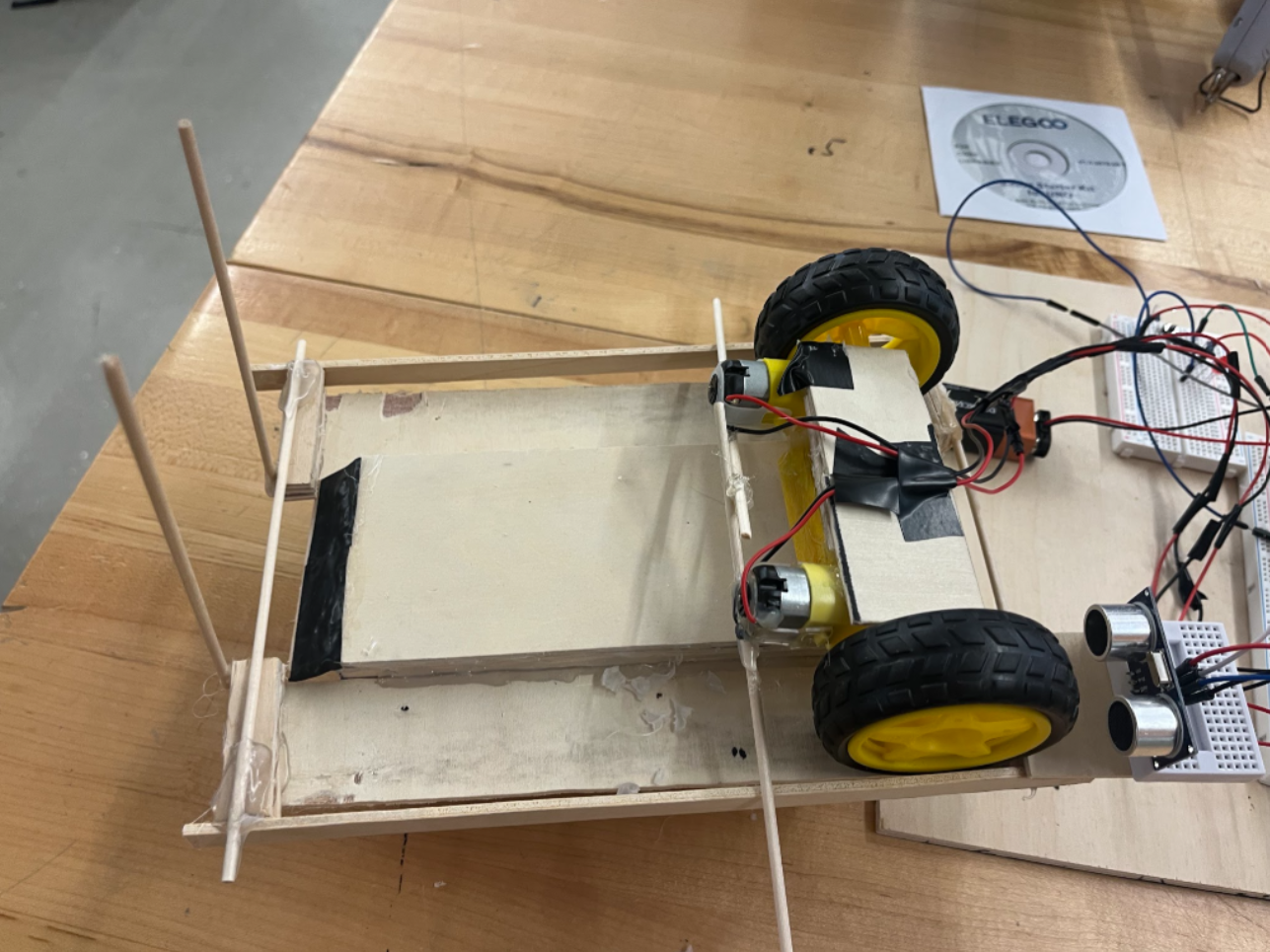
Function:
This involves using an ultrasonic sensor, L293D motor driver, photoresistor, LEDs, gearmotors, and a force sensor. A moving mechanical device sits atop a model solar panel representing that of one on Mars, where the precise force sensor and photoresistor will react to the presence of dust on top of the panel, preventing energy absorption, with both present for redundancy. Upon significant detection, a signal will be sent through the motor driver to begin the cleaning process, where it will move along the surface to the edge of the panel, then back, with a defined preset distance controlled by the ultrasonic sensor. If obstruction is still present afterwards, a warning signal is transmitted.
Additonal/Future
I am doing all I can to support Low Voltage members in these projects, and in the meantime when I have time, now that things are a little more adjusted, am currently doing research into two other projects I want to work ' on this year where I can be directly involved in actual development.
One is collaborating with two other mechanical engineers on a 1/10 fully custom RC car reaching 100mph, where I will design the whole electrical system and control. The other is a solo design for an interactive piano MIDI recording and control board. I will try to update progress as time goes on to these and other Sun Devil Motorsports projects' progress, and anything else that may come up!